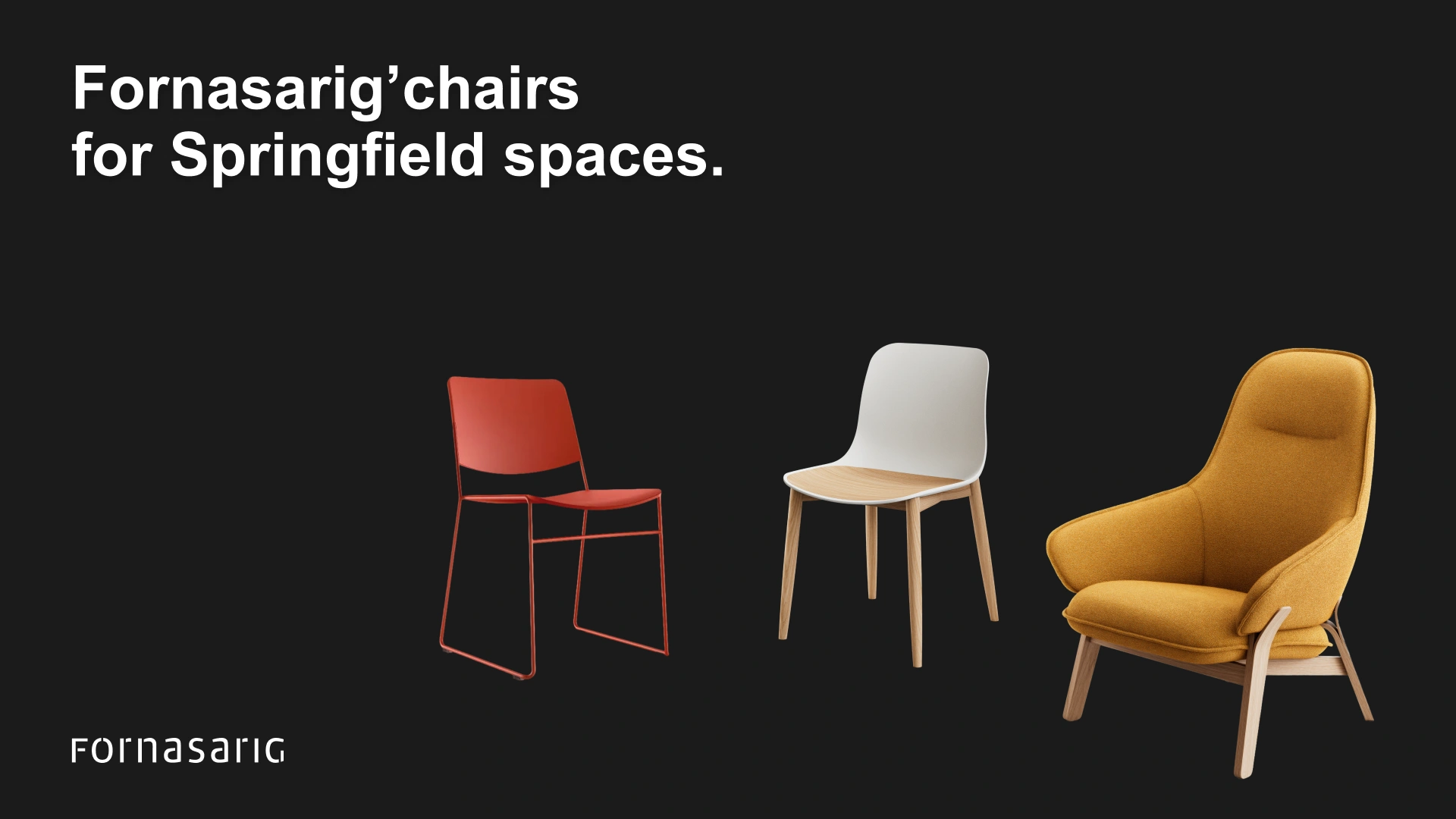
Why design chairs matter in Springfield’s civic and public environments
Design chairs Springfield respond to a context defined by public institutions, civic buildings and community-oriented spaces. Within the broader framework outlined in Design Chairs Illinois, Springfield represents an environment where seating must support reliability, clarity and long-term performance. In these settings, chairs contribute directly to how public spaces function, welcome users and remain efficient over time.
Civic interiors in Springfield often host meetings, assemblies, educational activities and community events. Seating must therefore accommodate diverse users while remaining easy to manage and maintain. Designers select chairs that combine ergonomic support with durability, ensuring comfort without compromising operational efficiency.
Comfort remains a fundamental requirement. A well-proportioned chair supports posture naturally, allowing users to remain seated during meetings, lectures or public gatherings without discomfort. Carefully calibrated seat depth, curvature and backrest geometry contribute to interiors that feel orderly, accessible and inclusive.
Durability is particularly important in civic environments. Public buildings experience continuous use, frequent movement and varied occupancy levels. Seating must therefore be built with stable structures and resilient materials capable of maintaining performance over time. Lightweight yet robust frames allow staff to reconfigure spaces efficiently while preserving safety and visual order.
Sustainability also plays an increasing role in public procurement. Institutions in Springfield prioritise furniture designed for longevity, recyclable components and low-impact finishes. When seating aligns with these principles, civic interiors reflect responsibility and long-term value.
Seating collections suited to Springfield civic interiors
Springfield’s civic and public spaces require seating that balances functionality, durability and understated design. The following collections illustrate how design chairs respond to these expectations.
Wolfgang Lounge & Wolfgang Metal
Wolfgang offers a refined solution for public reception areas, meeting rooms and civic hospitality spaces. Its enveloping shell provides consistent ergonomic support, allowing users to remain comfortable during extended sessions. The solid wood version introduces warmth and material depth, while the metal-base variant delivers a lighter expression suitable for contemporary public interiors.
Designers value Wolfgang for its balance between comfort and visual restraint, supporting environments that require dignity and approachability.
Link60X
Flexibility is essential in civic buildings, council chambers and multipurpose community spaces. Link60 X responds through extreme stackability and a lightweight steel structure that simplifies frequent reconfiguration. Seating layouts can be adjusted quickly to support assemblies, presentations and public events.
The reinforced resin version ensures durability and easy maintenance, making it particularly suitable for high-traffic public environments. Optional accessories such as writing tablets, armrests and linking systems extend usability across varied civic applications.
Cato X & Cato Lounge
Cato introduces a more expressive yet controlled design language appropriate for community centres, informal meeting areas and public lounges. Its sculptural shell adds identity while remaining practical through stackability and compact proportions. Cato Lounge expands this concept with softer dimensions that enhance comfort in waiting areas and social spaces.
Customisation options allow finishes and colours to align with institutional palettes and architectural materials, supporting cohesive civic interiors.
Case histories that illustrate performance, comfort and long-term quality relevant to Springfield
Springfield shares many characteristics with international civic and public environments where seating must support durability, adaptability and inclusive comfort. The following case histories provide relevant reference points for public projects.
Ayers Rock Resort, Australia
At Arnguli Bar and Grill and Mangata Bistro and Bar, seating contributes significantly to the guest experience. Camilla, Basicwood and Wolfgang 54 were selected for their comfort, tactile materials and ability to integrate with a warm, natural palette. Their resilience under continuous use offers insight applicable to civic environments that prioritise long-term quality.
Urana Aquatic Leisure Centre, Australia
This multipurpose community venue demonstrates how adaptable seating supports daily operations. Link60X enables rapid layout changes through extreme stackability and a lightweight structure. The reinforced resin version ensures durability and low maintenance, qualities directly applicable to public and civic spaces.
Maison Krug, France
In this historic champagne house, Amati Lounge and Moka chairs reinforce a refined atmosphere through elegant proportions and crafted details. While the context differs, the project illustrates how seating can support extended use while maintaining visual clarity, a principle relevant to civic interiors.
SLA Salad Bar, Netherlands
This contemporary restaurant concept uses Wolfgang Metal to support a calm, efficient interior. The lightweight frame and tactile finishes contribute to clarity and durability, aligning with public environments that value order and accessibility.
Paven Restaurant, Finland
Located beside the water, Paven Restaurant employs Wolfgang to create a relaxed dining environment supported by ergonomic comfort and natural materials. The emphasis on proportion and usability offers meaningful parallels for civic spaces seeking comfort without excess.
This hybrid hospitality project combines guest rooms, terraces and shared spaces. Wolfgang and Link Outdoor support varied daily functions through durability and adaptability. Their performance mirrors the needs of civic and community environments that host multiple activities.
Together, these case histories demonstrate how chairs designed with clarity, resilience and ergonomic balance can support demanding public interiors. They provide relevant benchmarks for Springfield projects focused on reliability and long-term performance.
Why Springfield institutions choose seating that balances durability, accessibility and civic clarity
Public institutions in Springfield prioritise seating that supports inclusive use, operational efficiency and visual order. Chairs must perform reliably, adapt to varied civic functions and maintain a composed presence. When ergonomics, durability and material integrity align, seating becomes a stable foundation for public interiors.
As civic spaces host meetings, events and community activities, lightweight and well-engineered chairs enable efficient reconfiguration while preserving functionality and safety. Materials selected for longevity ensure consistent performance under intensive use.
Fornasarig’s collections respond to these expectations through a combination of craftsmanship, ergonomic research and structural integrity. Each chair is designed to support public use, maintain its proportions and integrate seamlessly into civic interiors that value reliability, accessibility and refined simplicity.