The meaning of material intelligence
Material intelligence describes how materials communicate function, emotion, and performance through their intrinsic qualities. In contract design, this intelligence becomes visible as soon as surfaces guide perception, structures support movement, and textures influence how people experience a space. For this reason, material intelligence acts as a design language embedded in matter.
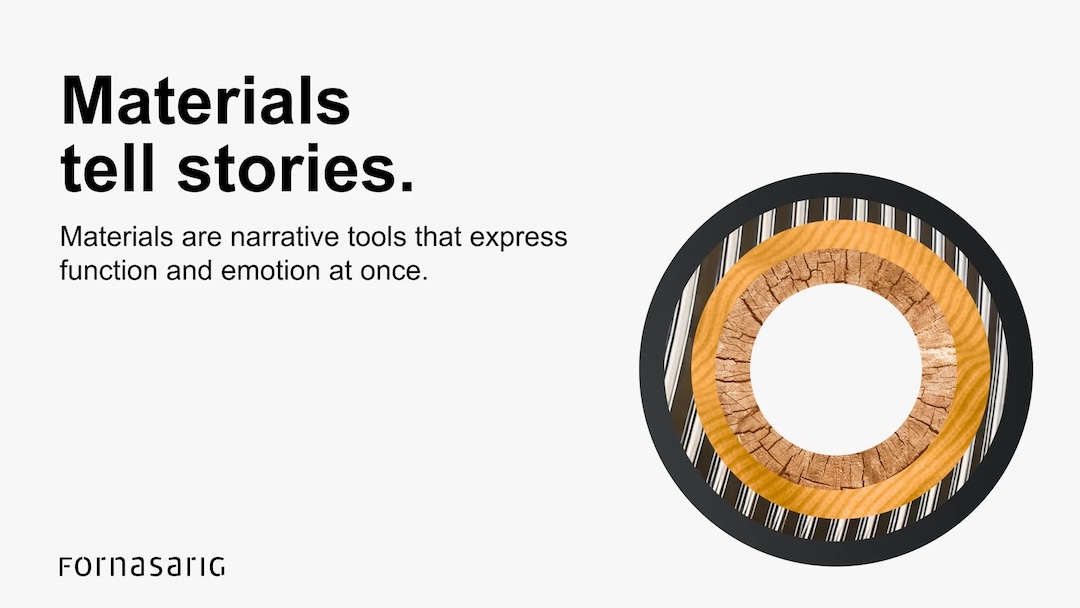
At the same time, every material carries a specific responsibility. Wood introduces warmth and acoustic softness, shaping the atmosphere before anyone sits. Metal brings structural clarity and resilience, defining rhythm and durability. Polymers allow flexible geometry, ergonomic curvature, and lightweight strength. Fabrics add texture, colour, and sound control, turning comfort into a sensory dimension. Through these interactions, materials stop behaving like simple components and begin to function as narrative tools.
In contemporary contract interiors, such narratives are increasingly essential. Meeting rooms, hospitality venues, learning environments, and workspaces rely on materials to communicate intention. A matte surface reduces visual noise; a curved profile invites better posture; a fine texture softens light. Step by step, these signals influence behaviour, movement, and attention.
Within this context, Fornasarig considers material intelligence the foundation of every collection. Each chair originates from the dialogue between materials a dialogue that aligns engineering with emotion. The precision of steel rod integrates with the softness of upholstery; the resilience of reinforced polyolefin resin meets the warmth of FSC-certified wood. As a result, the seating becomes durable and expressive, technical yet human.
Understanding material intelligence also means recognising its ethical dimension. Materials chosen with care reduce waste, improve longevity, and support circular design. The ability to separate components at the product’s end of life, or to rely on recyclable polymers and low-VOC finishes, transforms engineering decisions into environmental commitments. Consequently, sustainability becomes part of the intelligence embedded in each material, not an external addition.
Ultimately, material intelligence represents a way of thinking. It suggests that every surface conveys meaning, every texture shapes an experience, and every material brings its own form of knowledge. Through this lens, Fornasarig’s work becomes a philosophy; one that guides how chairs are built, how spaces adapt, and how design speaks to the people it serves.
Materials as narrative tools
Materials shape the identity of a chair long before its silhouette appears.
They tell stories through temperature, texture, density, and sound. For this reason, material intelligence becomes a narrative framework: a way to design experiences rather than objects.
Wood, for example, communicates calm and craftsmanship. Its grain carries warmth, making a room feel more human. In hospitality and meeting environments, this warmth lowers visual tension and supports a sense of welcome. When shaped with precision, wood combines tradition with an architectural clarity that elevates the entire space.
Metal, instead, speaks through precision. The steel rod and Asform tube used by Fornasarig convey a message of reliability. Their continuous lines, welded and refined with care, introduce rhythm and lightness. As a result, metal becomes the backbone of dynamic interiors, supporting movement while maintaining visual purity.
Polymers add another voice. Reinforced polyolefin resin enables complex 3D surfaces and ergonomic profiles, making comfort a structural quality. Its matte texture softens reflections, while its resilience ensures stability in high-traffic settings. In this way, polymer translates engineering into softness and adaptability.
Fabric, finally, introduces atmosphere. Textiles absorb sound, modulate colour, and shift the emotional temperature of a room. A finely woven upholstery can transform a meeting room into a place of clarity and focus, while a textured surface adds depth and tactile intimacy. Through these nuances, fabric becomes a bridge between the technical and the sensory.
When combined, these materials create a multidimensional narrative.
A steel frame paired with a soft fabric seat speaks of balance.
A polymer shell supported by metal expresses precision and movement.
Wood touched by upholstery tells a story of comfort rooted in tradition.
Consequently, a chair becomes more than an object. It becomes a medium, a way to express the character of a space. Meeting rooms gain clarity, hospitality venues gain warmth, and learning environments gain focus. Each material contributes its own voice, and together they construct a coherent, intentional story.
For Fornasarig, this narrative is fundamental. Every collection is shaped by the belief that materials are not a decorative layer, but a language capable of guiding how people sit, interact, and experience a room. Material intelligence turns matter into meaning.
The dialogue between materials
Material intelligence becomes truly visible when different materials begin to interact.
A chair is rarely a single substance: it is a conversation between elements, each contributing a role that the others cannot fulfill. Through this dialogue, materials balance one another, creating a structure that is functional, expressive, and emotionally resonant.
Wood and metal, for example, form one of the most harmonious relationships in contract furniture. Wood softens the visual language of a space, bringing warmth and natural depth. Metal, by contrast, offers precision and slender strength. When combined, the tactile calm of wood stabilizes the structural clarity of metal, allowing the frame to remain thin without sacrificing integrity. This duet creates a sense of quiet confidence, warm enough for hospitality, reliable enough for workplaces.
Polymer and metal speak another language. The resin introduces flexibility, ergonomic curvature, and a matte finish that absorbs light with elegance. The metal frame provides the geometric discipline needed to support that flexibility. As a result, the chair gains both movement and stability, adapting to high-traffic environments without losing its clean silhouette. This is the dialogue of contemporary contract design: resilience paired with comfort, technology paired with softness.
Fabric, meanwhile, connects everything. Textiles mediate temperature, acoustics, and touch. Upholstery transforms wood into a welcoming surface, enriches polymer with texture, and softens the linear rigor of metal. Through this interplay, fabric becomes the emotional counterpoint in the conversation, the element that turns engineering into atmosphere.
The dialogue between materials is not just aesthetic. It is an ecosystem in which each element elevates the others. Wood brings human warmth; metal brings architectural precision; polymer brings ergonomic intelligence; textile brings sensory depth. Together, they form a dynamic system capable of responding to different spaces, behaviours, and needs.
In Fornasarig’s design philosophy, this dialogue is treated with the same importance as form. Every composition is calibrated to ensure that materials do not compete but resonate, each amplifying the purpose of the others. Chairs become balanced structures where durability, comfort, and elegance coexist seamlessly. Material intelligence emerges from these relationships, turning the object into a coherent, intentional expression of space.
How material intelligence shapes contract spaces
Material intelligence shapes contract spaces by defining how people move, focus, and experience their surroundings.
In environments that must adapt quickly: meeting rooms, auditoriums, hospitality venues, learning centres, materials influence not only comfort, but behaviour. For this reason, the way materials are selected and combined becomes an architectural decision as important as layout or lighting.
In meeting rooms, for example, clarity and concentration depend on visual harmony. Materials with matte finishes reduce glare, while warm tones in wood or fabric soften the cognitive load during long sessions. Metal frames maintain structural precision without adding weight, allowing spaces to reconfigure easily from workshops to presentations. Through this balance, furniture becomes a silent enabler of focus.
In hospitality spaces, material intelligence shapes atmosphere. Wood brings emotional grounding, fabric introduces intimacy, and metal adds contemporary refinement. The interplay of these elements creates environments that feel inviting yet professional places where guests sense comfort before they fully understand why. As a result, materials become part of the brand identity of the space, not just part of its furniture.
In learning environments, the needs shift again. Flexibility, durability, and acoustic control become key. Polymer shells support posture during long sessions, while fabrics can help absorb sound and create zones of calm. Metal frames offer resilience suitable for active use and continuous movement. Through these qualities, materials support attention, engagement, and the natural rhythm of learning.
In large-scale gathering spaces, such as auditoriums or multipurpose halls, the dialogue between materials determines efficiency. Stackable chairs rely on lightweight frames and resilient shells to move quickly and store compactly. Fabrics may be chosen to reduce reverberation, while polymers resist wear from constant handling. Consequently, material intelligence transforms logistical challenges into spatial fluidity.
Across all these contexts, material intelligence acts as a connective tissue: it links human needs with architectural goals, technical constraints with sensory qualities, durability with elegance. When materials are chosen with intention, spaces become coherent, responsive, and emotionally balanced.
For Fornasarig, this is not a trend, it is a methodology. Every project begins by understanding the nature of the space, the behaviour it hosts, and the emotions it aims to evoke. Materials are then selected to translate these intentions into physical form, ensuring that each chair contributes to the flow, identity, and long-term value of the environment.
Material intelligence shapes contract spaces because it gives matter a purpose. It turns wood into welcome, metal into movement, polymer into comfort, and fabric into atmosphere. In this way, design becomes not only visible but deeply felt.
Toward a culture of material intelligence
Material intelligence is more than a methodology, it is a culture.
It invites designers, architects, and companies to consider how materials shape not only objects, but the environments where people connect, collaborate, and grow. Through this perspective, every project becomes an opportunity to create spaces that are both functional and meaningful.
In a world where contract spaces evolve rapidly, this culture offers a stable foundation. Materials chosen with intention endure changing trends; they support circular processes, reduce environmental impact, and enhance the longevity of design. At the same time, they preserve the emotional clarity that makes a space memorable. The combination of wood, metal, polymer, and fabric becomes a vocabulary capable of expressing values such as hospitality, precision, or concentration.
For Fornasarig, cultivating this culture means working with materials in a way that honours their potential. Each chair is the result of research, dialogue, and craftsmanship; a synthesis of structure, comfort, and emotion. From the warmth of FSC-certified wood to the resilience of reinforced polyolefin resin, from the precision of steel rod to the softness of upholstery, every element is selected for what it can contribute to the overall experience.
Consequently, material intelligence guides not only how chairs are built, but how spaces are imagined. It encourages designers to think beyond aesthetics, to consider how matter influences posture, interaction, acoustics, and even the emotional tone of a room. In this sense, materials become partners in the creative process, shaping environments with quiet authority.
Ultimately, embracing material intelligence means recognising that the beauty of a space lies in more than its appearance.
It lies in how it supports people.
In how it adapts.
In how it endures.
This is why Fornasarig treats materials as narrative tools and not simply components.
By giving matter a voice, the company shapes spaces that are clear, elegant, and human spaces where design speaks softly, but with intention.
This is the reason why material intelligence turns furniture into architecture and architecture into experience.