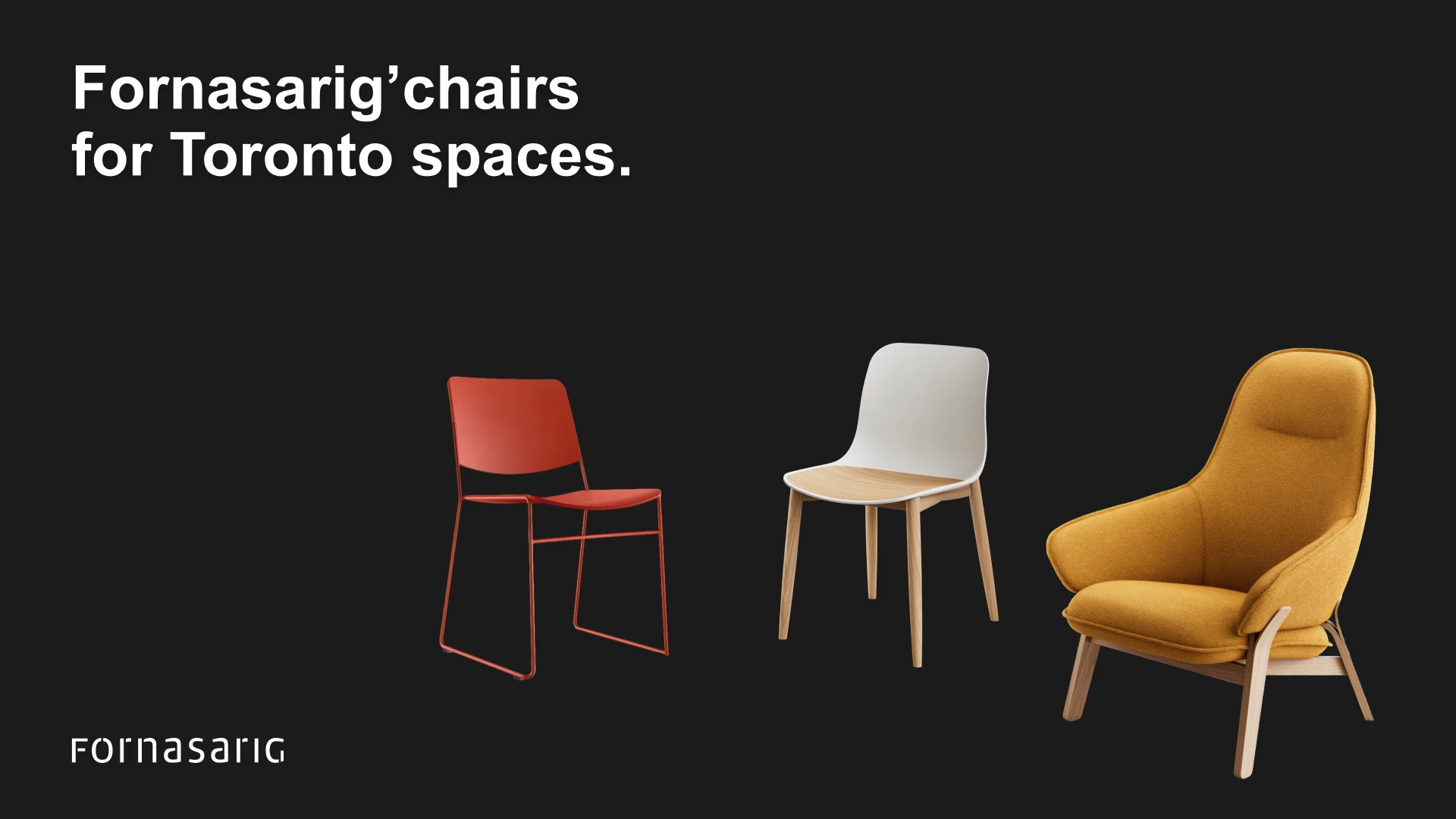
Design chairs Toronto: why interiors rely on comfort, clarity and long-term performance
Design chairs Toronto reflect a city shaped by cultural diversity, architectural innovation and a strong appreciation for functional, modern interiors. Because Toronto brings together hospitality, education, workplace and public spaces in a uniquely interconnected way, chairs play a crucial role in defining both atmosphere and usability. When ergonomics, material integrity and balanced proportions work together, interiors become more adaptable and more welcoming throughout the day.
Across neighbourhoods like Downtown, Queen West, Yorkville and the Harbourfront, designers often seek seating that supports long dining experiences while maintaining a clear and contemporary aesthetic. Moreover, universities, community centres and mixed-use buildings across the Greater Toronto Area require chairs that withstand continuous use, frequent layout changes and high levels of activity. At the same time, flexible workplaces in districts such as the Financial District or King West depend on seating that feels light, ergonomic and easy to handle. These varied requirements show how design chairs Toronto must adapt smoothly while preserving a consistent visual presence.
Comfort is a significant priority in Toronto’s interior culture. A well-proportioned chair supports posture naturally, creating a welcoming experience for guests and users. When curvature, seat depth and lumbar support are calibrated with precision, the space immediately feels more cohesive. In addition, Toronto’s design identity often blends refined minimalism with warm, tactile materials, making the physical feel of a chair an important part of the overall atmosphere.
Durability is equally essential. Given the city’s large number of high-traffic interiors, designers consistently choose chairs engineered with high-resilience steel rod, reinforced technical resin or FSC-certified wood. These materials help seating remain stable and visually controlled even after repeated use, which is particularly valuable in educational and hospitality settings.
Sustainability also influences many procurement decisions. Studios across Toronto often prioritise recyclable components, low-impact finishes and long-lasting construction. When seating reflects these principles, interiors not only perform better but also align with long-term environmental values shared across the city’s design community.
This article expands on the broader perspective introduced in our Design Chairs Canada guide, offering a Toronto-specific view on how comfort, durability and material clarity shape contemporary interiors.
Collections that shape Toronto’s contemporary interiors
Toronto’s interiors combine refined minimalism, material warmth and a strong focus on functionality. Because of this, seating must provide comfort, durability and a clear aesthetic presence while adapting to a wide variety of hospitality venues, cultural buildings and flexible workplaces. The following collections illustrate how ergonomics, proportion and engineered resilience support the expectations of designers across the city.
Wolfgang Lounge & Wolfgang Metal
Wolfgang embodies a calm and tactile elegance that aligns naturally with Toronto’s design landscape. Its enveloping shell supports posture in a way that feels both immediate and long-lasting, which is ideal for restaurants, boutique hotels and crafted hospitality venues across the city. Moreover, the balance between soft curvature and controlled geometry makes Wolfgang a strong choice for interiors aiming to blend warmth with contemporary clarity.
The solid wood version reflects Toronto’s appreciation for natural materials and subtle textures often found in spaces throughout Yorkville, Rosedale or The Annex. In contrast, the metal-base version introduces a slimmer, more urban silhouette suited for cafés, cultural venues and creative offices in areas like Queen West or King Street. Designers also value the ability to choose between high-back and low-back versions, adjusting the sense of intimacy or formality according to the project.
Because Wolfgang combines comfort, refined proportions and material authenticity, it integrates seamlessly into Toronto interiors that require both atmosphere and long-term performance.
Link60X
Toronto hosts a wide range of multi-use buildings and event-oriented environments, making Link60X especially relevant. Its extreme stackability allows staff to reorganise large rooms in a short time, which is vital for universities, conference centres and community halls across the Greater Toronto Area. The chair’s lightweight frame ensures fluid movement, helping interiors shift between learning formats, presentations or large gatherings without losing spatial coherence.
The 11 millimetre steel rod frame provides durability with minimal visual weight. In addition, the reinforced resin version offers scratch resistance and low-maintenance performance, making it suitable for educational settings, cultural venues and high-traffic public spaces. Optional accessories such as writing tablets, armrests and linking systems extend Link60X’s versatility, ensuring that the chair adapts naturally to workshops, seminars and collaborative activities.
Because Toronto’s interiors often require constant flexibility, Link60X supports this dynamic rhythm with a combination of operational ease, ergonomic clarity and clean proportions.
Cato X & Cato Lounge
Cato introduces a more expressive design language while maintaining a sense of balance and usability. Its one-piece shell provides strong visual identity without overwhelming the room, which makes it particularly suitable for cafés, coworking hubs and contemporary hospitality venues across the city. The chair’s stackability adds further practical value for spaces that shift between different layouts throughout the day.
Cato Lounge brings a softer, more spacious interpretation of the same aesthetic, enhancing comfort in hotel lobbies, informal meeting spaces and design-forward work environments. Both versions allow extensive customisation, enabling designers to refine colours, finishes and textures to match Toronto’s diverse interior palettes. This adaptability supports projects that combine crafted details with a contemporary, urban feel.
Because Cato unites character and functional performance, it becomes a compelling choice for Toronto designers who want seating that is expressive, durable and easy to integrate into modern spatial compositions.
Case histories that resonate with Toronto’s contemporary design culture
Toronto’s interiors embrace clarity, warmth and long-term durability. Because of this, designers often look to international and local case histories to understand how seating performs in different architectural contexts. The following examples illustrate how comfort, proportion and material integrity enhance hospitality venues, public buildings and hybrid environments. Moreover, they highlight qualities that align naturally with the expectations of Toronto designers, who consistently seek a balance between atmosphere and functionality.
Sir John Brewing Co, Canada
At Sir John Brewing Co in Lachute, a modern brasserie rooted in local tradition, seating plays a meaningful role in shaping both atmosphere and identity. The venue required chairs that could bridge the gap between a warm, crafted interior and an outdoor space exposed to harsh climatic conditions. Link Outdoor was selected for the patio because its clean lines, stackability and weather resistance support continuous use without compromising aesthetics. Indoors, Wolfgang Wood Chair introduces a sense of warmth and sophistication, reinforcing the brasserie’s refined yet approachable character.
At Arnguli Bar and Grill and Mangata Bistro and Bar, seating plays an essential role in shaping the guest experience. Camilla, Basicwood and Wolfgang 54 were selected for their blend of comfort, tactile presence and long-lasting stability. The natural palette reinforces the interior’s relationship with the surrounding landscape, while the chairs maintain both structural and visual quality over time. This case offers a relevant parallel for Toronto hospitality venues that value warmth, cohesion and extended seating comfort.
Urana Aquatic Leisure Centre – Australia
This multipurpose community venue demonstrates how adaptable seating can improve daily operations. Link60X enables rapid layout changes thanks to its extreme stackability and lightweight construction. The reinforced resin version ensures consistent performance in high-traffic settings, while the chair’s proportions maintain clarity throughout the space. The project reflects an approach that resonates with Toronto’s public facilities, where flexibility and durability are essential.
In this historic champagne house, Amati Lounge and Moka chairs create an environment defined by refinement and intimacy. Their ergonomic balance supports long tastings and special events, and the custom finishes reinforce the architectural identity of the space. This project shows how crafted seating elevates fine-dining and boutique hospitality, offering insights for Toronto venues that seek precision and understated elegance.
This plant-driven restaurant uses Wolfgang Metal to support a calm and minimalist interior palette. The lightweight frame and tactile finishes allow the chairs to remain comfortable throughout the day without interrupting the visual rhythm of the space. The case mirrors the needs of many Toronto cafés and casual restaurants that require durable seating aligned with clean, contemporary design language.
Situated beside the water, Paven Restaurant uses Wolfgang to maintain a dining atmosphere strongly connected to its natural surroundings. The ergonomic shell supports relaxed, extended seating, while the natural finishes enhance a sense of calm. This approach resonates with many Toronto venues that draw inspiration from nature or waterfront environments, creating interiors that feel composed and welcoming.
This hybrid hospitality venue brings together terraces, guest rooms and communal areas. Wolfgang and Link Outdoor create a cohesive aesthetic across different functions while supporting constant movement throughout the day. Their durability and adaptability make them suitable for mixed-use environments, reflecting the same flexibility required in Toronto spaces where layout changes are frequent.
These case histories collectively illustrate how comfort, material integrity and long-term resilience elevate a wide range of interiors. They also confirm how seating that performs well internationally and locally integrates naturally into Toronto’s hospitality and public environments, where clarity, warmth and reliability are essential values.
Why Toronto designers choose seating that balances comfort, durability and crafted simplicity
Toronto’s interiors are defined by a blend of modern clarity, material warmth and long-term performance. Because of this, seating must support both atmosphere and everyday functionality. When a chair maintains ergonomic balance, durable construction and a calm visual presence, it becomes a reliable component in hospitality venues, educational environments and public spaces across the city.
Moreover, Toronto hosts many interiors that shift between different configurations throughout the day. Restaurants move from daytime service to evening dining, cultural venues host varied programming and workplaces adjust layouts according to changing needs. Seating that is lightweight and easy to move allows these transitions to happen smoothly, helping spaces remain coherent and efficient.
Sustainability also plays a significant role in local design decisions. Studios increasingly look for chairs made with recyclable components, low-impact finishes and structures engineered for longevity. When furniture reflects these principles, interiors become more responsible and more aligned with Toronto’s forward-looking design culture.
Fornasarig’s collections respond naturally to these expectations through a balance of craftsmanship, ergonomic research and material integrity. Each piece is designed to support extended use, maintain its proportions over time and integrate seamlessly into interiors that value comfort, clarity and durability. As a result, designers who seek refined simplicity and reliable performance often choose seating that reflects the same qualities that define contemporary Toronto design.